

Are you noticing your home’s roof looking dull and worn out? The truth is that roofs aren’t just functional; they can dramatically affect your house’s curb appeal. This blog post will walk you through the step-by-step process of painting your roof, from inspection to that final coat of paint.
Keep reading to give your roof—and ultimately, your home—a fresh new look!
Key Takeaways
- Roof painting involves several essential steps, including inspection, cleaning, repairing, and applying a multi-coat system.
- The roof painting process begins with a thorough inspection to assess the roof’s condition and identify any issues that must be addressed.
- Cleaning the roof is an essential step that helps remove dirt, moss, and stains to ensure a clean surface for painting.
- Roof repairs are necessary before painting to fix any damage or weak spots on the roof’s surface.
- The four coat system of roof painting includes surface preparation, priming, applying multiple coats of paint for colour enhancement and protection, and finally, adding a protective coating to seal the painted surface from weather elements.
- Roof painting enhances visual appeal and protects from environmental elements such as rain and UV rays. It can also reduce energy costs by reflecting sunlight away from the home’s interior.
Steps of Roof Painting
The roof painting process involves several important steps, including roof inspection, cleaning, repairing, and applying a multi-coat system.
Roof Inspection
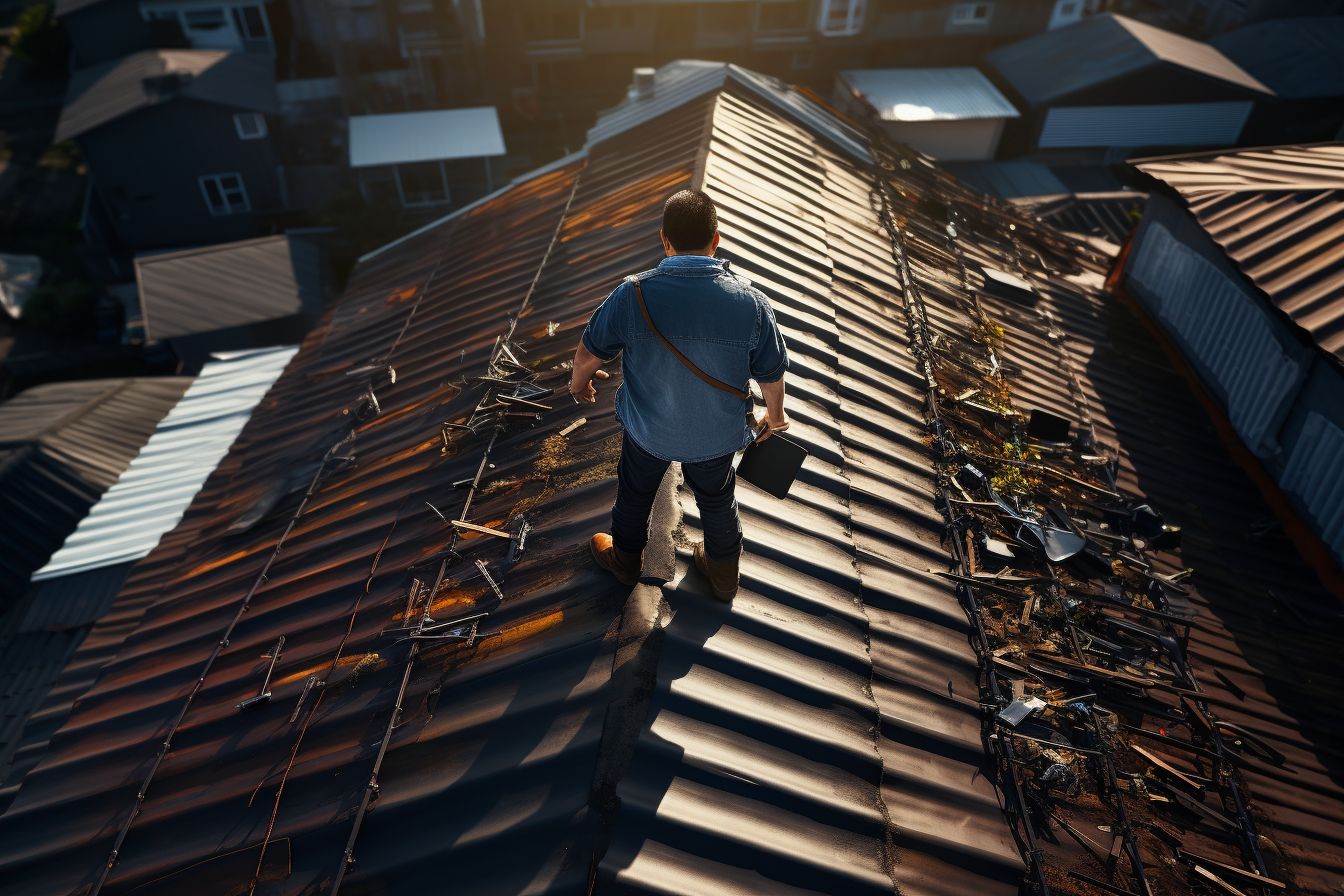
Roof inspections play a critical role in assessing the current condition of your roof. Experts meticulously uncover evidence of water infiltration and lift shingles without inflicting any damage.
They also evaluate internal and external aspects, setting the stage for roof painting preparation. Safety comes first during these assessments; inspectors utilize checklists to monitor fall hazards while working at heights.
Regular maintenance coupled with diligent inspections helps spot issues before they escalate, warding off high-cost repairs. The expertise combined with keen observation saves time and money in this essential step towards safeguarding your home from future risks.
Roof cleaning
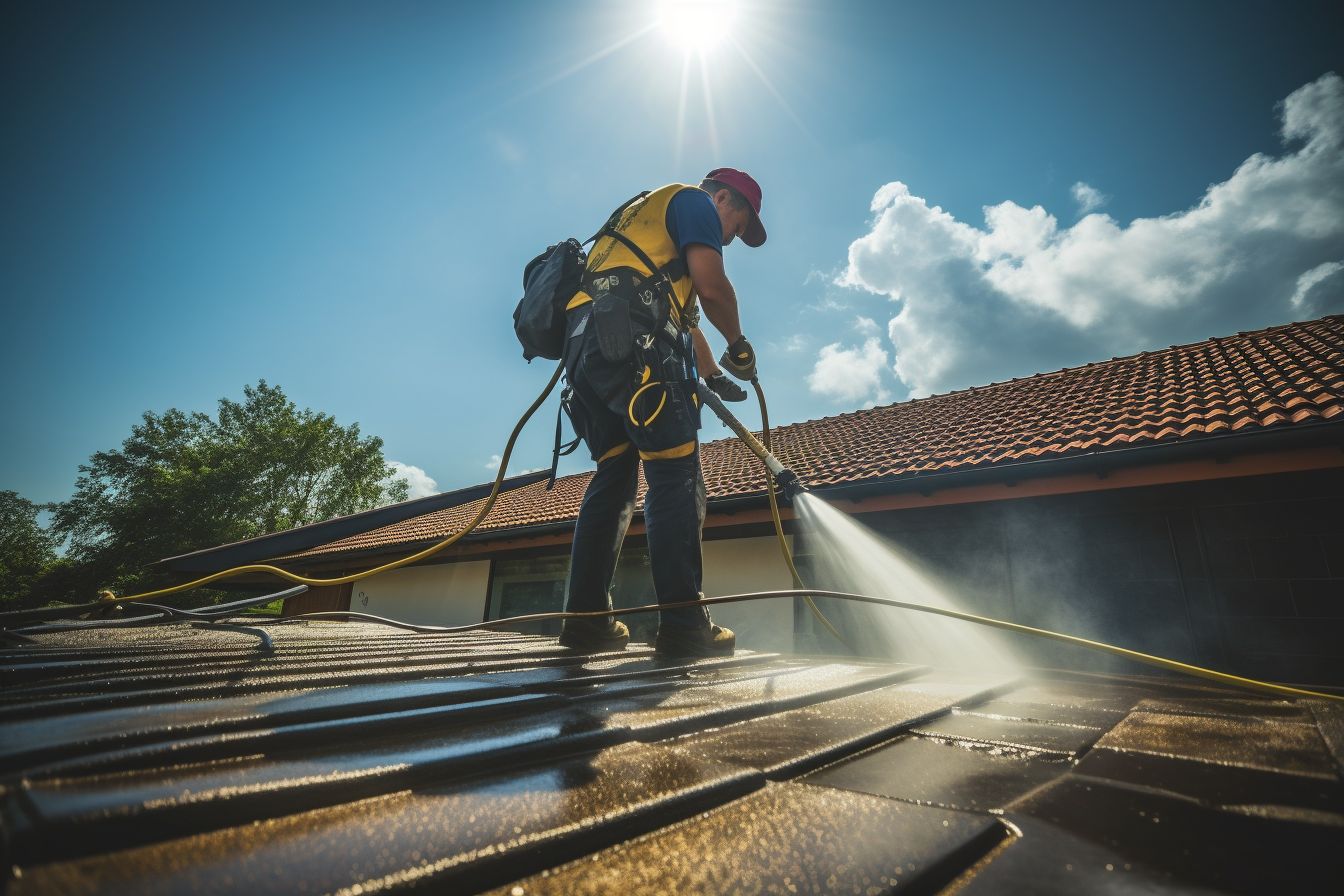
Roof cleaning stands as a crucial step in the roof painting process. It aids in removing dirt buildup, moss, and stains from your roof surface. Here’s how it works:
- A professional cleaner visually inspects the roof first. This helps to locate problematic spots needing additional care.
- The next approach involves using a chemical cleaning solution. It offers a less damaging way to free your roof from stains and buildup.
- Protecting paint panels is key during metal roof cleaning. Overlooking this can result in damage that requires re-coating or repainting.
- The process includes pressure washing for a thorough cleanse. However, it’s best performed sparingly so as not to wear away at your roof’s sealant or protective coating.
- Post-cleaning activities involve re-applying sealant and paint where necessary, especially after using abrasive cleaning methods.
- Regular exterior cleaning goes beyond aesthetics; it plays an important role in overall roof maintenance and longevity.
Roof repairing
Roof repair holds a critical place in the overall process of roof painting.
- The initial step involves conducting a comprehensive inspection of the roof’s condition. This includes examining the inside and outside surfaces for any signs of damage.
- If issues are found during the inspection, professionals tackle these problems promptly.
- Materials required for effective roof repair vary depending on the nature and extent of damage identified.
- Experts always advise homeowners to pay attention to signs like leaks or dampness, as early detection can prevent further deterioration.
- It’s essential to take safety precautions seriously when working on rooftops. Be aware of potentially hazardous substances such as asbestos, paint fumes, and harmful chemicals.
- The progress of repair work largely depends on how much damage has been detected in the initial roof inspection.
- After completing roof repair tasks, professionals ensure the surface is ready for cleaning before applying paint coating.
- Regular roof maintenance can significantly reduce the need for extensive repairs while prolonging its lifespan.
Roof painting (4 Coat System)
Roof painting involves a four coat system that ensures long-lasting protection and durability. Here are the steps involved:
- Surface preparation: The roof surface is thoroughly cleaned and inspected for any damage or debris before painting.
- Priming: A high-quality primer is applied to create a smooth and even base for the paint to adhere to.
- First coat of paint: The first coat is applied, evenly covering the entire roof surface.
- Second coat of paint: A second coat of paint is applied to enhance the colour and coverage of the roof.
- Third coat of paint: Another layer of paint is added for protection and longevity.
- Protective coating: A protective coating is applied to seal and protect the painted surface from weather elements.
Understanding Roof Painting and Coating
Roof painting and coating is an essential part of roof maintenance. It involves applying a protective layer to the roof surface, enhancing its appearance and providing added durability and longevity.
The process includes inspecting the roof for any damages or weak spots, cleaning it thoroughly to remove dirt and debris, and addressing any necessary repairs before finally applying the coating.
The purpose of roof painting and coating goes beyond just cosmetic improvements. By adding a protective layer, it acts as a membrane that shields the roof from environmental elements like rain, UV rays, and temperature fluctuations.
This helps prevent leaks, cracks, and other damage that can compromise the structural integrity of your roof. Additionally, roof coatings can cover small cracks and seams, offering an alternative solution to costly repairs.
Not only does proper roof painting help protect your property from potential water damage or leaks but it also contributes to energy efficiency by reducing heat absorption from sunlight.
This can lead to lower energy costs in both hot summers and cold winters. Furthermore, with the right coating on your roof surface, you can enhance its resilience against harsh weather conditions such as heavy rainstorms or snowfall.
To sum up, understanding the importance of roof painting and coating is crucial for maintaining a functional roofing system that is visually appealing while protecting various external factors.
By investing in regular inspections and professional coatings application using high-quality materials like elastomeric coatings 4-coat systems), You will prolong the lifespan of your existing roofing structure while enjoying all these benefits mentioned above.
Benefits of Roof Painting
Roof painting offers a range of benefits, including enhanced visual appeal, increased protection from the elements, reduced energy costs, and improved weather resilience.
Visual Appeal
Roof painting is not just about protecting and maintaining your roof; it is also a way to enhance the visual appeal of your home. By giving your roof a fresh coat of paint, you can completely revamp the look of your house and improve its overall aesthetics.
A visually appealing roof adds value to your property and increases curb appeal, making it more attractive to potential buyers or visitors. Whether you choose a bold colour that stands out or a subtle shade that complements the rest of your exterior, painting your roof can transform the appearance of your home and give it a much-needed upgrade.
So why settle for a dull and worn-out roof when you can easily refresh and beautify it with some paint? It’s time to give your home a new lease on life by enhancing its visual appeal through roof painting.
Protection
Roof painting provides essential protection for your roof, preventing damage and moisture from seeping into your home. The waterproof roof paint creates a barrier that reduces the formation of algae and fungus, keeping your roof clean and free from unsightly growths.
Additionally, by sealing off any potential entry points for water, roof painting helps to reduce allergens that can arise from moisture and water infiltration. With the use of waterproof sealants, it offers long-term protection against moisture growth and ensures the longevity of your roof.
Invest in regular roof maintenance through painting to preserve the integrity of your roof and safeguard your home from potential damage caused by leaks or structural issues.
Reduced Energy Cost
Reflective roof paint plays a significant role in reducing energy costs for homeowners. By painting the roof white or using specialized coatings, sunlight is reflected away, resulting in lower temperatures inside the home.
This cooling effect can reduce reliance on air conditioning during hot summer months, ultimately decreasing energy consumption and saving money on utility bills. Metal roofs painted with reflective coatings provide additional benefits by keeping homes cooler and minimizing heat transfer.
With these energy-efficient solutions, homeowners can enjoy cost savings while contributing to environmental conservation through reduced energy usage.
Weather Resilience
Roof painting plays a crucial role in enhancing the weather resilience of your roof. Providing a protective shield against various weather conditions, such as rain, snow, and harsh sunlight, helps maintain the integrity of your roof over time.
The reflective coating used in roof painting also helps to lower the temperature of your roof by reflecting sunlight, leading to reduced energy costs for cooling your home. Proper roof painting improves UV resistance and extends the roof’s lifespan, ensuring long-term weatherproofing and durability.
With its ability to withstand different elements, roof painting is essential to maintaining a resilient and long-lasting roofing system.
Conclusion
In conclusion, the process of roof painting involves steps such as inspection, cleaning, repairing, and applying a coat of paint. This enhances the visual appeal of a home and provides crucial protection to the roof.
Following this step-by-step guide, you can ensure that your roof is well-maintained and weather-resistant for years.
FAQs
1. Is it necessary to clean the roof before painting?
Yes, cleaning the roof is essential before painting as it helps remove dirt, debris, and mildew that can affect the paint’s adhesion and longevity.
2. What tools do I need for roof painting?
For roof painting, you will need a pressure washer or hose for cleaning, a brush or roller for applying paint, extension poles for reaching high areas, and safety equipment such as gloves and goggles.
3. Can I use any type of paint for roof painting?
No, choosing a specialized roof paint designed to withstand weather conditions such as UV rays and moisture is best. These paints offer better durability and protection.
4. How long does it take to complete the roof painting process?
The duration of the roof painting process depends on various factors, including the size of the roof, weather conditions, and drying time between coats. It can typically take several days to complete.
5. Do I need professional help with roof painting?
While some homeowners may DIY their roof painting project if they have experience with home improvement projects, hiring a professional painter ensures proper preparation and application techniques are used for optimal results.