
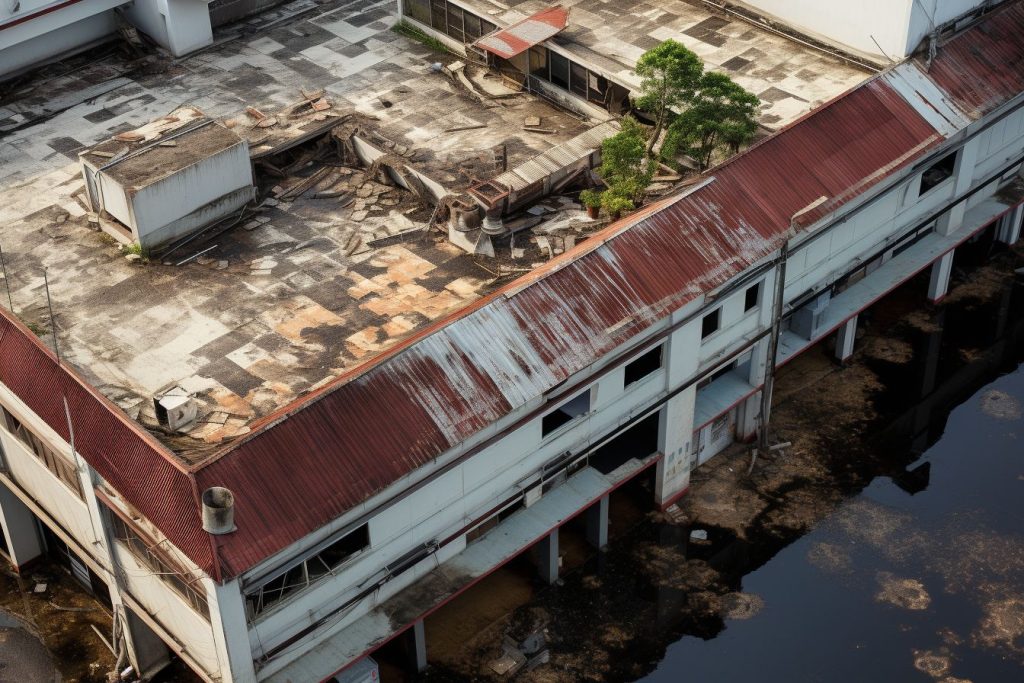
Is your commercial building’s roof showing signs of distress or damage? Fact is, problems like leakage, blistering on the roof, damaged membrane and escalating energy bills are all indications that it may be time for a repair.
This comprehensive guide will help you identify these troubling signals early on and offer effective solutions to maintain the structural integrity of your roof. Let’s dive in and learn more about preserving your investment one shingle at a time!
Key Takeaways
- Moisture problems, such as leaks and water damage, are clear indicators that your commercial roof needs repair.
- Rising energy bills can be a sign of a faulty commercial roof, with cracks and wear causing heat to escape or enter the building.
- Bubbles on the roof suggest underlying issues with the roofing material and should be addressed promptly.
- Sagging areas on the roof indicate potential structural integrity issues and require immediate attention.
Signs Your Commercial Roof Needs Repair
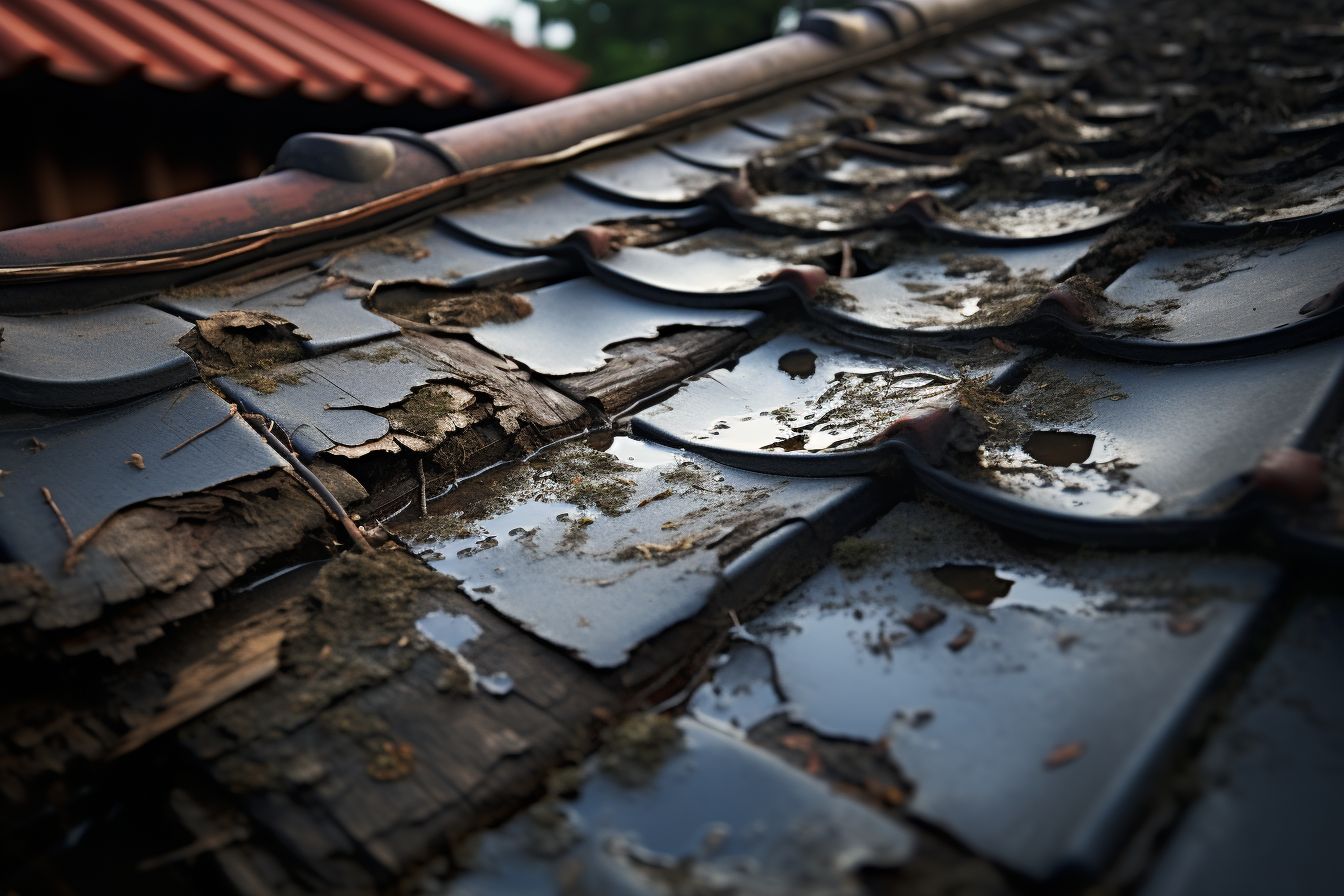
Moisture problems, rising energy bills, bubbles on the roof, and sagging areas are all signs that your commercial roof needs repair.
Moisture Problems
Moisture problems can be a clear indication that your commercial roof needs repair. Leaks and water damage are often the first tell-tale signs of issues. An increase in dampness within the building may signal condensation under the roof membrane, leading to wet insulation and possible mold growth which left unattended for too long will rot the structure.
Another visible sign is stains different from usual coloration on ceilings or walls, often accompanied by a musty odor indicating trapped moisture behind them. High humidity levels inside could also hint towards underlying moisture issues with your roof – these situations require immediate attention to prevent further deterioration of your property’s structural integrity.
In some cases, you might notice blisters or bubbles caused by trapped moisture; this kind of issue not only affects appearance but poses potential threats to safety as well when severe enough due to risk of collapse under heavy loads like snowfall during winters seasons.
Rising Energy Bills
Unexpectedly high utility expenses often point to a faulty commercial roof. Energy consumption can spike due to cracks, holes and wear on the roofing material that allow heat to escape or enter, upsetting the building’s thermal performance.
Roof damage affects insulation capabilities; therefore, climbing energy bills indicate an exhaustive roof trying to compensate for these flaws.
Sagging areas on a roof are not just unsightly; they significantly impact energy efficiency as well. These depressions make it easier for warm air to get trapped, leading to increased usage of cooling systems during summer months.
Moreover, signs of water leaks and moisture inside your premises also contribute to rising utility costs. That extra dampness means more work for dehumidifiers or heating units in hand combating weather-related issues – another sign your commercial roof needs repair!
Bubbles on the Roof
Bubbles appearing on a commercial roof often signal that all is not well beneath the surface. Primarily, these bubbles or pockets may indicate problems with the material underneath.
Frequently, such occurrences result from improper application of roofing materials during installation or repairs. Various types of membrane roofs like built-up roofing, TPO, PVC and EPDM, often battle this bubbling issue.
The higher the number of bubbles visible on your roof’s surface, the more urgent repair needs likely become. Therefore, periodic checks enable early detection and prompt rectification before further damage happens.
Sagging Areas
Sagging areas on a commercial roof are a clear sign that there may be underlying problems. These sagging sections can be caused by various factors, such as moisture accumulation or ponding, which compresses the roof insulation and weakens its structural integrity.
Another common cause of sagging is the weight of new roofing materials added to an already compromised roof. It is crucial to address these sagging areas promptly because they can lead to further damage and potentially costly repairs if left unattended.
To determine the extent of the damage and the appropriate course of action for repair or replacement, it would be best to have a professional inspection conducted on your commercial roof.
Detailed Examination of Signs Your Commercial Roof Needs Repair
Inspecting your commercial roof for signs of damage is crucial in ensuring its longevity and preventing costly repairs or replacements. A detailed examination can help you identify potential issues before they escalate into major problems.
You can start by looking for bubbles on the roof, as they often indicate trapped moisture and weak spots that require immediate attention. Sagging areas should also be closely inspected, as they can signify structural integrity issues that may lead to a complete roof system failure if addressed.
Additionally, check for rising energy bills, which could indicate poor insulation caused by a damaged roof. Interior moisture problems, such as musty odours or visible water stains, should not be ignored either, as these are clear indications of leaks that need prompt repair.
Regular inspections will allow you to stay ahead of any mouldSignificant or mildew growth and ensure the overall health of your commercial roofing system.
Importance of Addressing Roof Repairs
It’s important to address roof repairs promptly when it comes to commercial facilities. Regular maintenance and prompt repair can prevent further damage, improve energy efficiency, and enhance the overall safety of your building.
Ignoring or delaying roof repairs can lead to costly damage down the line.
I think it’s important to properly addressing roof repairs, which is crucial for maintaining the integrity of your commercial property. A well-maintained roof protects your building from weather elements and contributes to its overall efficiency.
By promptly addressing any issues with your roof, you can ensure that your facility remains in good condition and reduce energy costs in the long run.
Don’t underestimate the impact of neglecting roof repairs. Timely intervention can help prevent small problems from becoming major ones, saving you both time and money in the process.
So make it a priority to address any signs of damage or deterioration on your commercial roof as soon as possible.
Conclusion
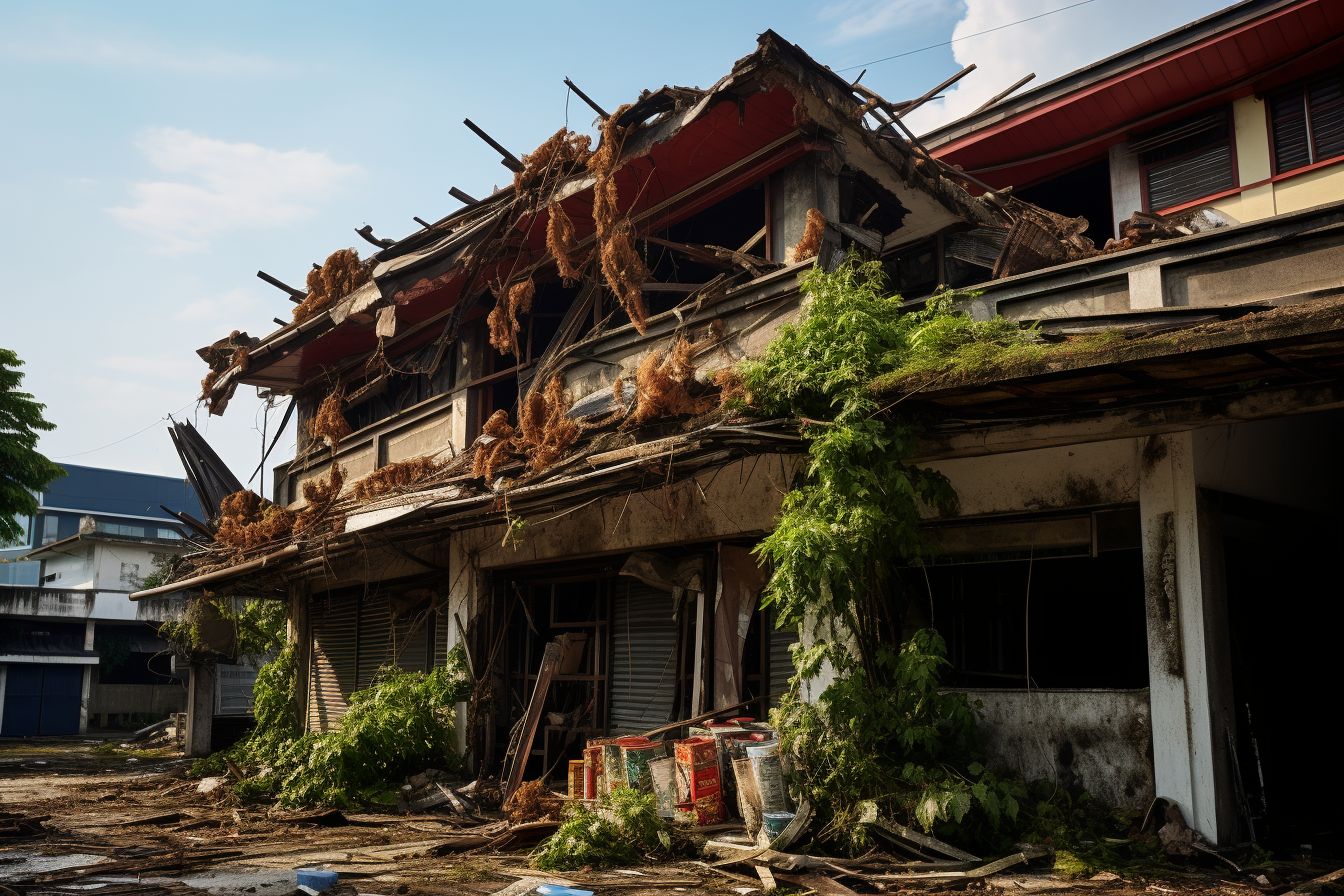
In conclusion, it is important to be aware of the signs that indicate your commercial roof needs repair. Moisture problems, rising energy bills, bubbles on the roof, and sagging areas are all warning signs that should not be ignored.
By addressing these issues promptly, you can avoid costly damages and ensure the longevity of your commercial building. Don’t wait until it’s too late – contact a roofing contractor for a thorough inspection and necessary repairs.
FAQs
1. How do I know if my commercial roof needs repair?
You can recognize signs of a damaged commercial roof by looking for indications such as water leaks, cracked or missing shingles, sagging sections, or visible wear and tear.
2. Can I delay getting my commercial roof repaired?
It is not advisable to postpone repairing your commercial roof as it can lead to more extensive damage and costly repairs in the future. Timely repairs help maintain the overall integrity of the roof.
3. What are the risks of ignoring signs that my commercial roof needs repair?
Ignoring signs that your commercial roof needs repair can result in further water damage to the building’s interior, compromised structural integrity, potential mold growth, and higher energy costs due to poor insulation.
4. How often should I have my commercial roof inspected?
To ensure early detection of any issues, it is recommended to have your commercial roof inspected at least once every year by a professional roofing contractor.
5. What factors determine the cost of repairing a commercial roof?
The cost of repairing a commercial roof depends on several factors including the type and extent of damage, size and complexity of the roofing system, accessibility for repairs, and choice of materials used for replacement.