
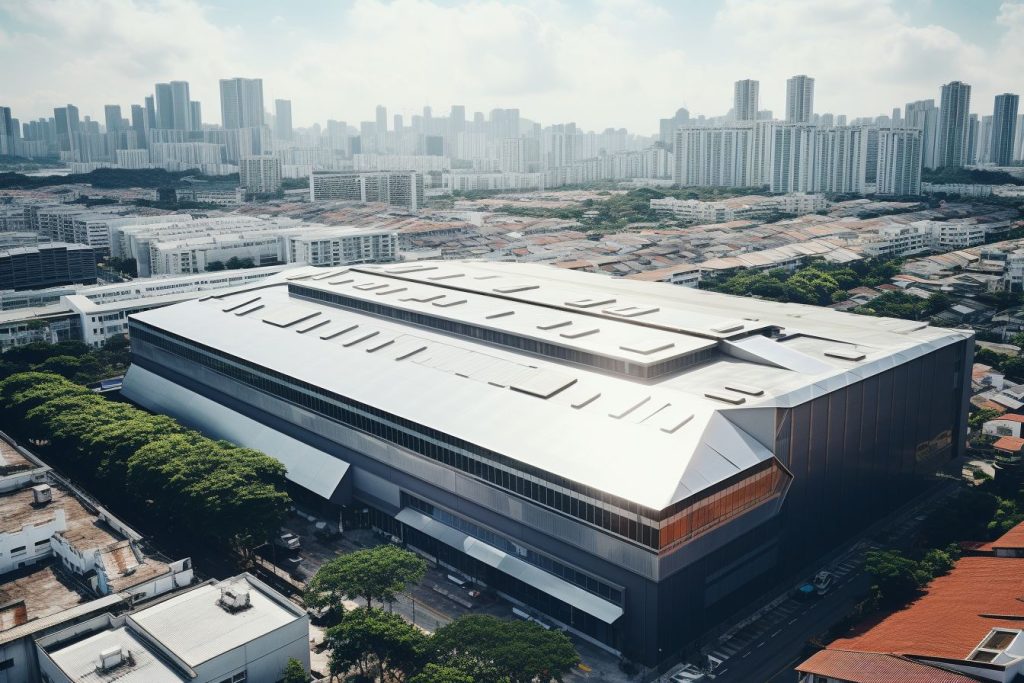
Are you worried about the cost of replacing your commercial property’s roof? It’s a legitimate concern, as expenses can range from $7 to $15 per square foot for metal roofs alone. This article will give you an in-depth understanding of what influences these costs and guide you on how to predict and budget efficiently for such projects.
Get ready to become well-versed with commercial roofing costs!
Key Takeaways
- Commercial roof replacement costs can range from $7 to $15 per square foot for metal roofs alone.
- The commercial roof replacement cost is determined by factors such as the type of roofing material, roof access and occupancy, and the condition of the underlying structure and insulation.
- Roof re-covering and roof coating are cost-effective alternatives to complete roof replacement that can save you money in the long run.
Factors that Impact the Cost of Commercial Roof Replacement
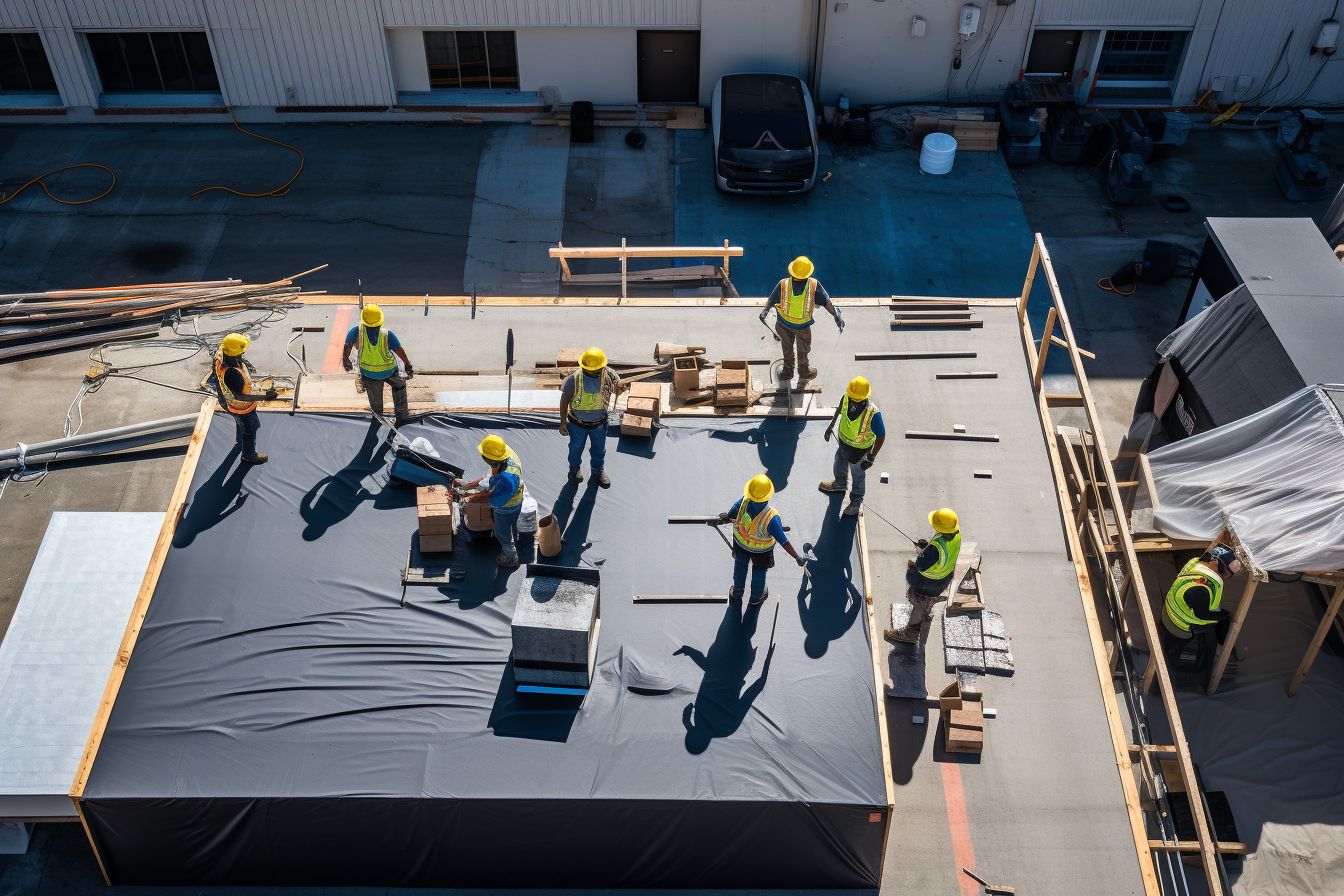
The cost of commercial roof replacement is influenced by factors such as the type of roofing materials used, accessibility to the roof and property occupancy, and the condition of the underlying roof structure and insulation.
Types of roofing materials (Flat, Sloped, Metal, Modified Bitumen, BUR Membrane, EPDM, TPO, PVC, Green Roofing System)
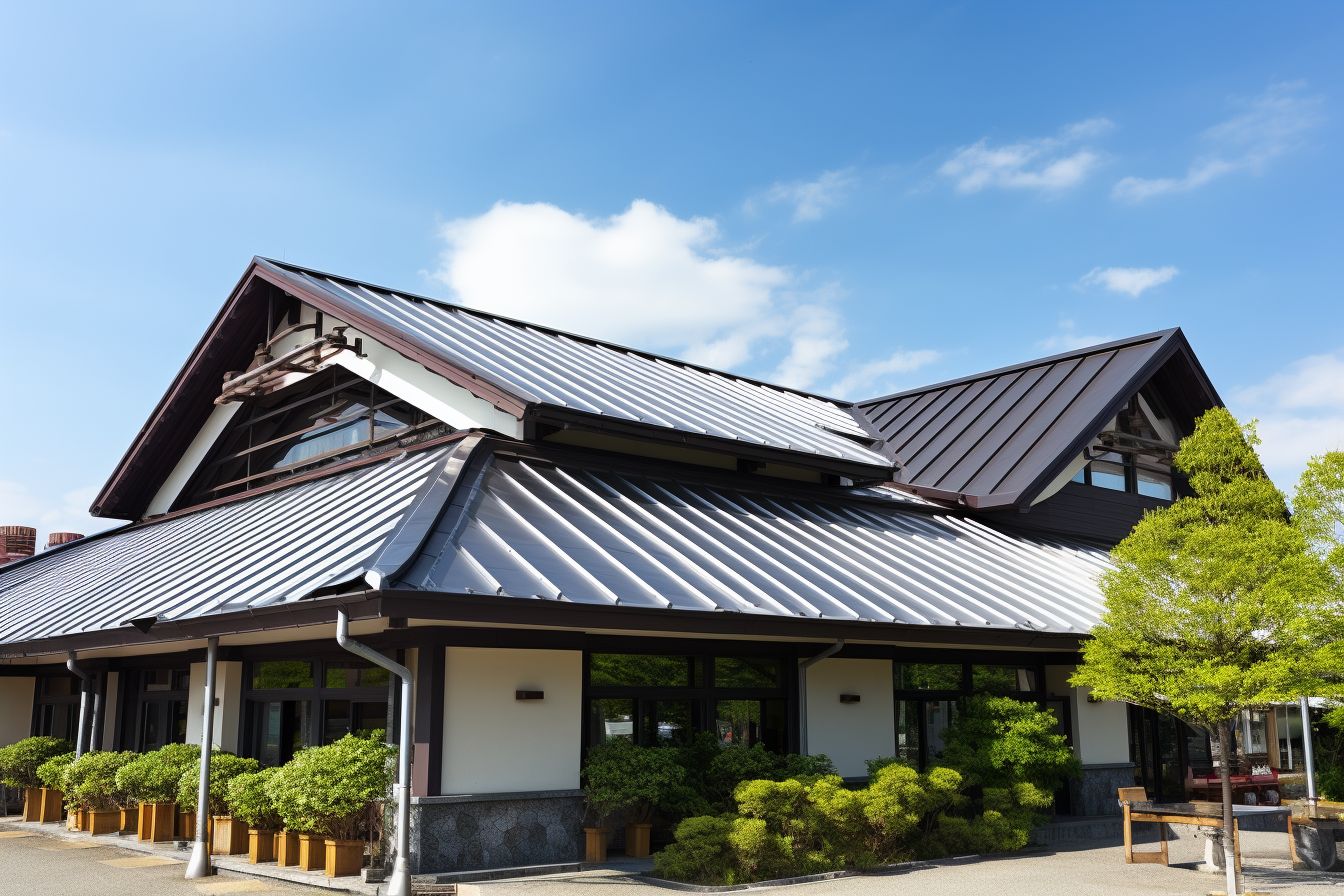
Exploring the variety of roofing materials can provide more insight into their impact on the cost of commercial roof replacement.
- Flat roofs are popular for many buildings, providing easy maintenance and affordability.
- Sloped roofs, often seen in certain kinds of businesses, entail different material and labour costs due to their distinct design.
- Metal roofs, despite being pricier upfront, offer durability and energy efficiency that can save money in the long run.
- Modified bitumen roofs deliver versatility at an affordable price, as mentioned earlier.
- BUR membrane systems comprise multiple layers, lending considerable strength and durability to this type of roof.
- EPDM roofs encompass one of the famous single-ply membranes for commercial flat roofs, along with TPO and PVC roofs.
- TPO roofs are another option within single-ply membranes widely used for their heat reflectivity and resistance to ultraviolet light, punctures, and tears.
- PVC roofs also belong to single-ply membranes noted for their superior strength, durability, and fire resistance.
- Green roofing systems make room for vegetation on your roof surface, bringing environmental benefits and reducing energy costs, though the installation might be more expensive than other types.
Roof access and property occupancy
Ground level or rooftop? This question matters when calculating the cost of commercial roof replacement. Roof access can significantly impact your roofing bills. Accessing a flat, lower-level rooftop is easy and requires fewer safety considerations, thus lowering labour costs.
On the other hand, high-rise buildings with complex access issues may require additional equipment and safety preparation, increasing expenses.
Property occupancy plays another crucial role in determining roofing costs for commercial properties. A bustling office building could disrupt daily operations during roof replacement procedures.
Often, specific measures are taken to minimise these interruptions, which might add extra dollars to your bill compared to an unoccupied property where work schedules can be more flexible.
Underlying roof structure and insulation
The complexity of the underlying roof structure plays a significant role in determining the cost of commercial roof replacement. Factors such as steepness, height and load-bearing capacities can influence your budget.
More complex structures usually require more labour, time, and materials, increasing overall expenses. Similarly, energy-efficient insulation is essential for commercial roofing systems to regulate indoor temperatures effectively.
However, this installation or upgrading process incurs extra costs due to the specific insulation material and its application method on different types of roofs.
Complete Guide to Commercial Roofing
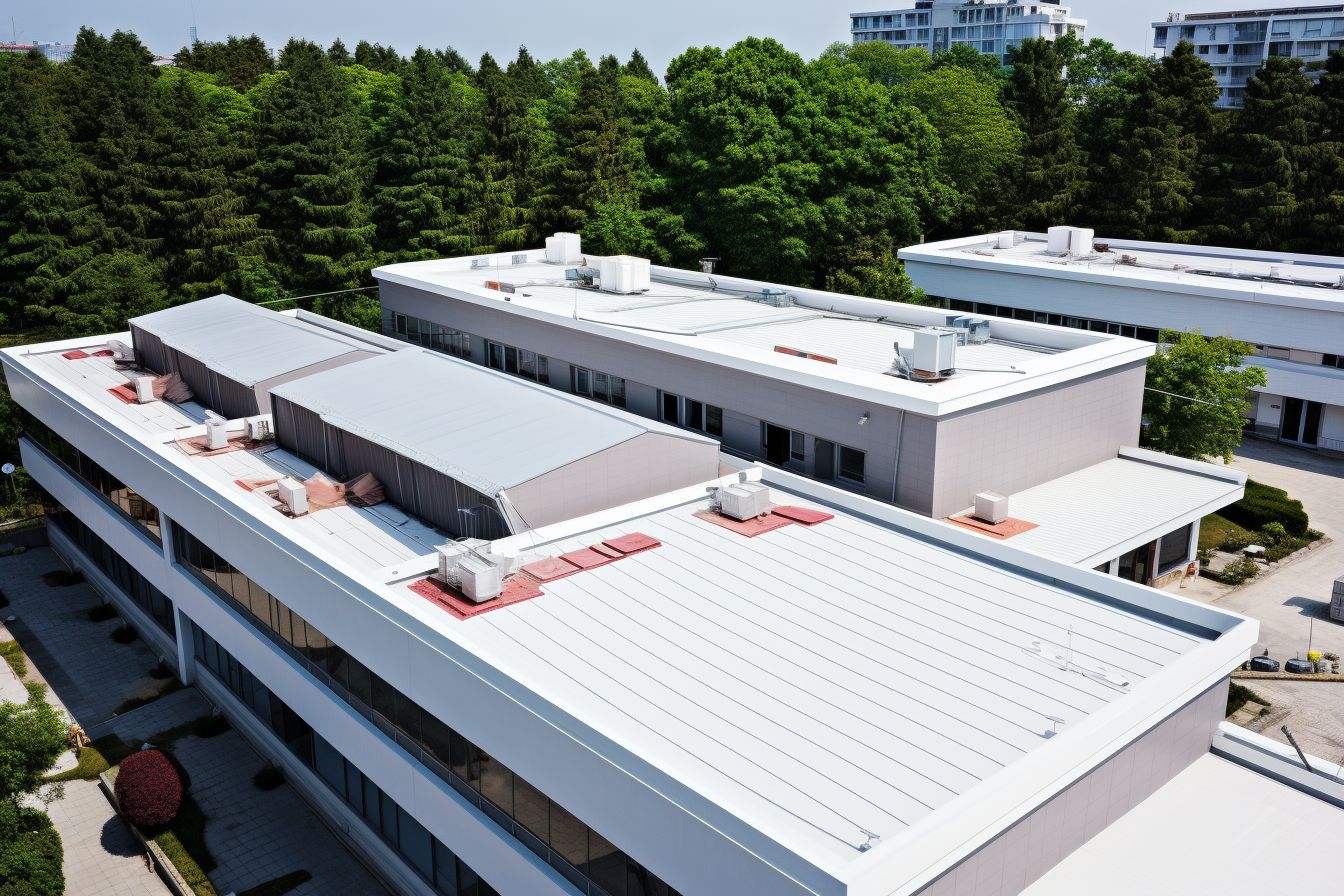
Commercial roofing is a crucial aspect of building construction and maintenance. This guide provides valuable information on different types of commercial roofing materials, costs, and uses.
Whether considering a flat roof system or exploring options for commercial roof designs, this guide offers insights to help you make informed decisions. Additionally, it covers common issues with commercial roofs and highlights important factors to consider for maintenance.
If you’re looking for an average cost estimate for commercial roof replacement or installation in 2023, this guide has also got you covered. Trust this comprehensive resource to navigate the commercial roofing world with confidence and knowledge.
Alternatives to Roof Replacement
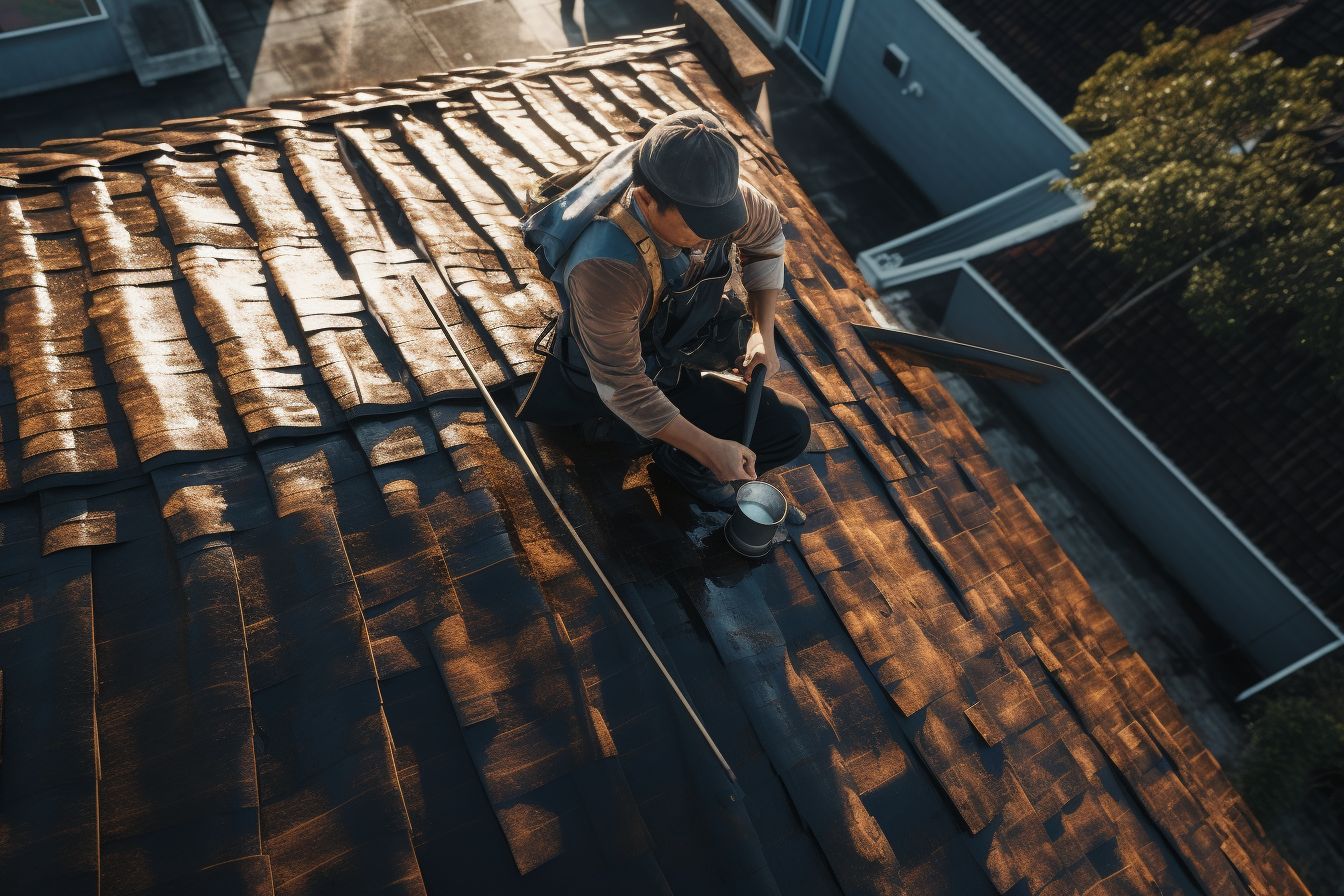
Roof re-covering and roof coating are two cost-effective alternatives to complete roof replacement. You can learn more about these options and how they can save you money in the long run.
Roof re-covering
Roof re-covering is an alternative to completely replacing a commercial roof. It involves installing a new layer of roofing material over the existing one, saving time and money.
Re-covering requires fewer materials and less labour than a complete replacement, making it a cost-effective option. Additionally, re-covering can increase the value of your property while providing added protection against leaks and other damages.
The cost of re-covering a roof will vary depending on the specific repairs needed, but it’s generally less expensive than starting from scratch with a brand-new roof installation.
Roof coating
Roof coating is a cost-effective alternative to roof replacement for commercial buildings. Applying the proper protective coatings can significantly extend the lifespan of a commercial roof, saving you money in the long run.
Elastomeric roof coatings, for example, are highly durable and provide excellent protection against leaks and damage. For eco-friendly and economical options, acrylic and silicone coatings are popular choices.
Light-coloured roof coatings can help reduce cooling costs by reflecting sunlight and keeping your building cooler. Investing in roof coating ensures a longer-lasting, energy-efficient solution for your commercial roofing needs.
Average Cost for Commercial Roof Replacement
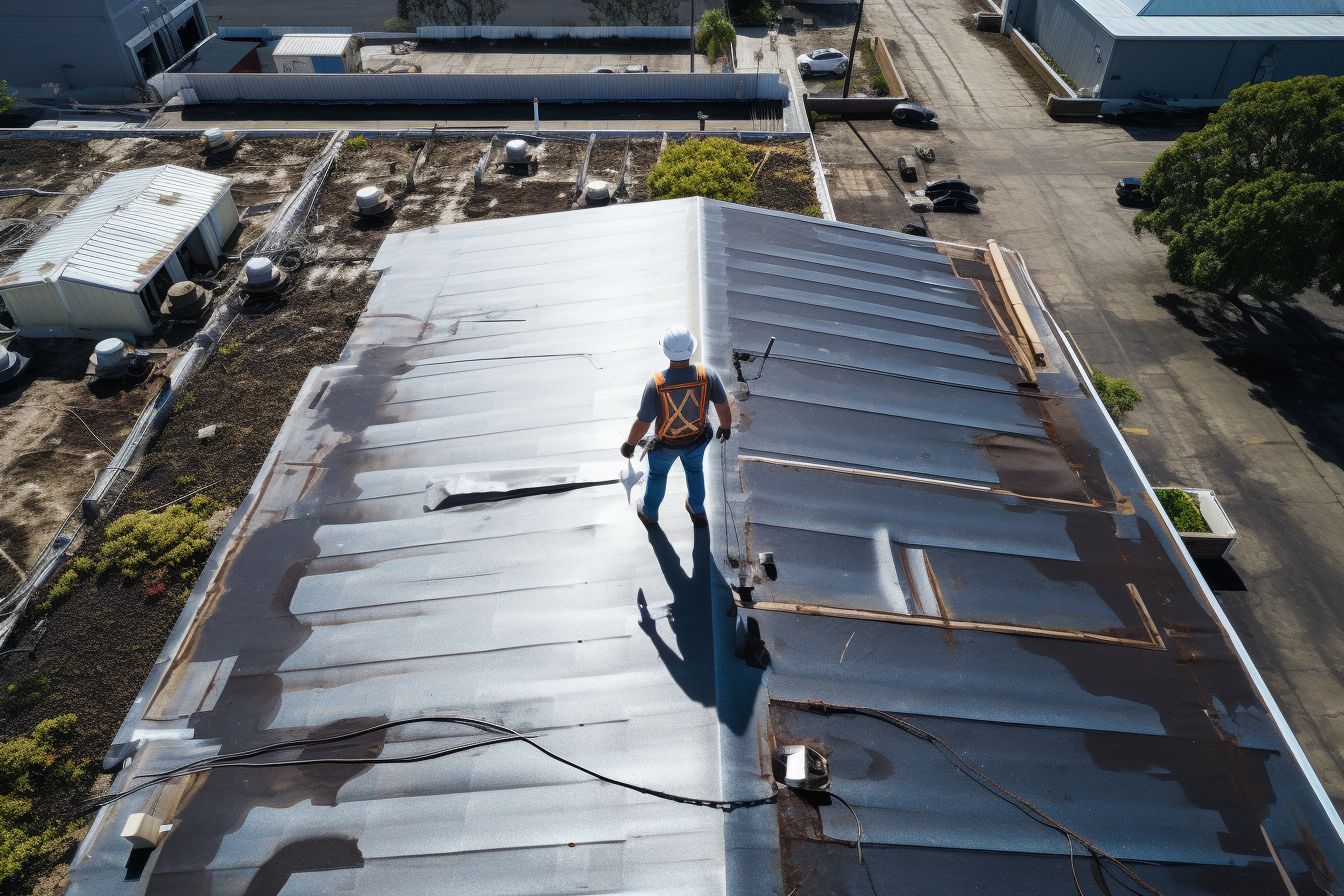
The cost of replacing a commercial roof can vary significantly depending on some factors. The type of roofing material, the size of the roof, and other aspects all play a vital role in determining the final cost. Below is a table that presents the average costs for commercial roof replacements.
| Type of Roof | Average Cost per Square Foot | Additional Information |
|---|---|---|
| Single-ply Roofing | $7.50 to $13.50 | These prices include materials and labour. |
| Modified Bitumen Roofing | Varies | The final cost depends on various factors and materials used. |
| TPO Roofing | $3.50 to $6.50 | This includes the cost of materials and labour for replacement. |
| General Commercial Roof Replacement 3 | 3 to $20+ | The cost can significantly vary based on the roof size and building type. |
| Flat Commercial Roof Replacement | Around $5,000 | This is the average cost for a flat roof replacement. |
Just so you know, these are average costs, and the final price can be influenced by the specifics of your project, local labour rates, and the cost of materials.
Conclusion
Understanding the cost of commercial roofing is essential for planning and budgeting purposes. Factors such as the type of roofing material, roof access and occupancy, underlying structure, and insulation all play a role in determining the overall cost.
By considering these factors and obtaining a detailed roof replacement estimate, building owners can better prepare for the expenses associated with commercial roofing projects.
FAQs
1. How much does commercial roofing typically cost?
The cost of commercial roofing can vary depending on factors such as the size of the roof, the type of materials used, and project complexity. It’s best to get a customised quote from a professional roofing contractor.
2. What are some common types of commercial roofing materials?
Commercial roofing materials include asphalt shingles, metal roofs, built-up roofs (BUR), single-ply membranes (such as EPDM or TPO), and modified bitumen.
3. Can a commercial roof be repaired instead of replacing it?
Sometimes, it is possible to repair specific issues with a commercial roof rather than replacing the entire one. A professional roofer can assess the condition and provide recommendations.
4. Are there any additional costs associated with commercial roofing projects?
Additional costs associated with commercial roofing projects may include permits, insulation upgrades, removing old layers of roofing material, or repairing underlying structural damage discovered during the process.
5. How long does a typical commercial roof installation take?
The duration of a typical commercial roof installation will depend on various factors, such as the size and complexity of the project. For larger or more intricate roofs, it could range from several days to a few weeks.