

When staring up at a damaged roof, have you ever considered tackling the repair yourself? It’s an undeniable fact that DIY roofing can potentially save homeowners significant sums of money.
This article will guide you through everything from the pros and cons to tips for cost-effective repairs and safety considerations. So, on your mark, set, let’s delve in!
Key Takeaways
- DIY roofing can save homeowners money by eliminating professional labour costs and allowing for personalized scheduling.
- However, there are downsides to DIY roofing, including hazards and the risk of voiding warranties or not meeting industry regulations.
- Factors to consider for DIY roofing include roof size and orientation, gathering necessary tools and materials, and prioritizing safety considerations.
Pros and Cons of DIY Roofing
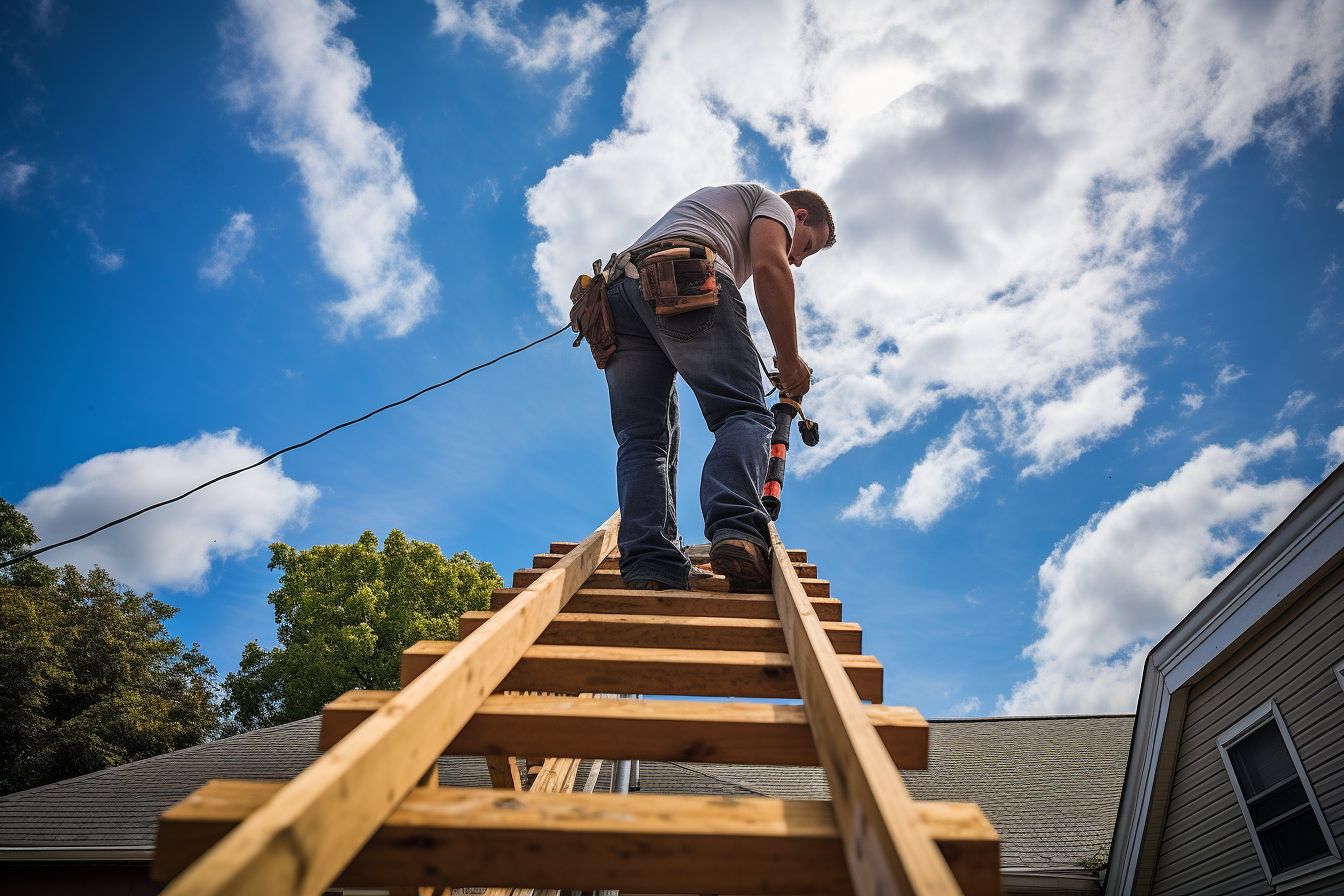
DIY roofing has both advantages and disadvantages that should be considered before undertaking the project.
Advantages of DIY roofing
DIY roofing has several advantages that make it an attractive option for homeowners. Firstly, cost-effective roofing options are a significant advantage of DIY projects. Independent roof installation saves the homeowner on professional labour costs. Also, personalized scheduling for roof projects is another advantage; you can work at your own pace without adhering to a professional’s timeline.
Disadvantages of DIY roofing
DIY roofing has several downsides you should contemplate before starting the project.
- Hazards are a major concern, as DIY roofing can increase the risk of accidents and injuries.
- Limited expertise could lead to mistakes that professionals would avoid.
- You may unknowingly void warranties on certain roofing parts.
- Without professional training, working safely at heights becomes more challenging.
- Your completed project might not meet industry regulations, resulting in poor-quality work.
- Complex repairs require specialized knowledge and skills that most homeowners lack.
- The risk of damage is higher due to a lack of experience or skill in roofing tasks.
- Poor workmanship is another potential pitfall, affecting the roof’s durability and aesthetic appeal.
Factors to Consider for DIY Roofing
When considering DIY roofing, there are several factors you should take into account, such as the size and orientation of your roof, the tools and materials needed for the job, and most importantly, safety considerations.
Roof size and orientation
Roof size and orientation significantly influence the success of a DIY roofing project. Large roofs require more materials, time, and energy to install shingles, especially if they have a steep pitch.
Low-sloped roofs are easier to navigate, which makes the installation process smoother. Your roof’s orientation can also impact the longevity and effectiveness of your chosen material due to factors such as sun exposure or weather conditions.
Detailed inspection should be carried out before starting any roofing project; it serves to identify existing architectural features like ridges, hips, abutments, and gables that could affect how you approach your DIY task.
Required tools and materials
Ensuring you have all the necessary tools and materials is an essential step in DIY roofing.
- First, gather roofing materials such as shingles, nails, weatherproof sealants, and plywood.
- Many of these materials include #15 or #30 Felt underlayment, asphalt shingles, drip edge and hook.
- Apart from materials, you will need various tools for the project.
- A roofing nail gun comes in handy when installing shingles quickly.
- Additionally, a roof hammer tacker stapler strengthens the fastening of shingles on the roof.
- Ensuring accurate measurements is crucial – this can be achieved with measuring tape or a laser tool.
- For marking lines before installation, you need chalk and reel tools.
- Also, a durable ladder that provides safe access to your roof is paramount.
- Always have a complete set of tools to avoid unnecessary delays during your DIY project.
Safety considerations
Falling from height is a major safety risk when undertaking DIY roofing. Tools, materials and even the homeowner can plummet, leading to grave injuries or property damage. Overlooking safety considerations isn’t an option; roof repair requires carefulness and expertise.
The use of improper tools escalates potential danger, while high wind conditions pose extra risks that may be unforeseen by amateurs. Inadequate knowledge of securing ladders or harnesses can lead to accidents.
Moreover, mishandled DIY projects could result in leaks, causing structural harm over time due to bad installation methods, which professionals are trained to evade efficiently.
What Repairs Can You DIY?
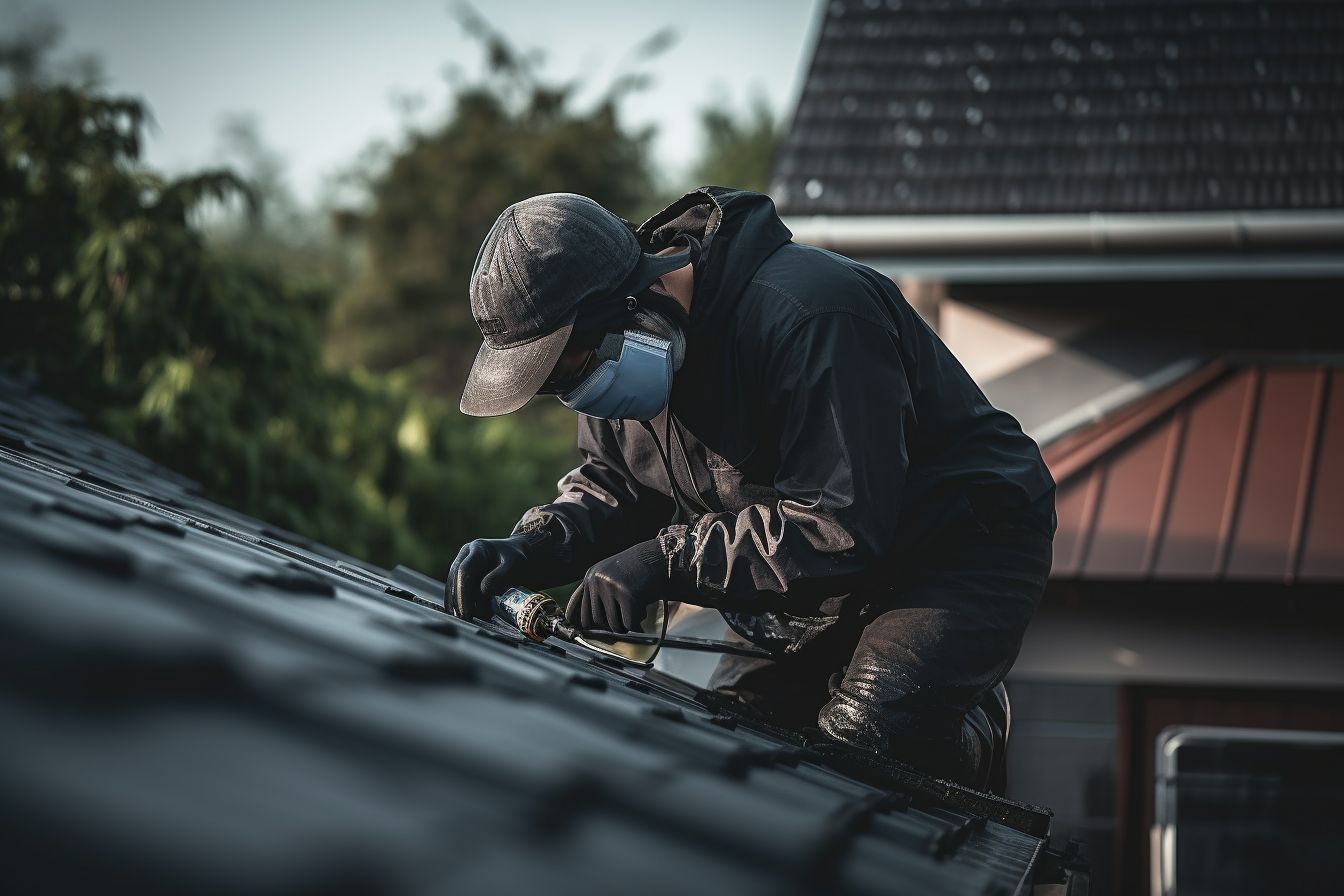
Types of roof repairs suitable for DIY include fixing minor leaks, replacing missing or damaged shingles, and repairing small flashing sections.
Types of roof repairs suitable for DIY
Certain roof repair projects can be easily handled by any homeowner, though some require professional expertise. Here are the types of roof repairs that are suitable for DIY:
- Replacing shingles: Damaged or missing shingles need immediate attention to prevent further roof damage. With the right tools, such as a hammer and nail gun, you can replace them yourself.
- Sealing leaks: If you notice a minor leak in your home, don’t panic! It may simply require some caulking or roofing cement for a quick fix.
- Replacing flashing: Flashing is the thin metal strips found around edges and objects on your roof. This can be replaced by homeowners comfortable dealing with minor precision work.
- Roof cleaning: Regular maintenance of your roofs, like removing debris, moss or algae, keeps the roof in good condition and prevents damage.
Limitations and risks of DIY repairs
Homeowners should be aware that DIY roofing repairs often come with inherent risks and limitations. Firstly, it’s important to recognize that not all roof repairs are cost-effective when tackled alone; unexpected complications can drive costs higher than anticipated.
Safety concerns form another critical consideration, as working at height can present significant hazards if not approached correctly or without the right equipment. DIY work on your roof also holds potential warranty issues – many warranties become void if damage is caused during self-done repair attempts.
Moreover, there’s an undeniable risk of further damaging your house structure by adopting inappropriate repair techniques or hasty decisions due to limited knowledge and experience.
Lastly, the financial implications of ineffective repairs could weigh heavily on a homeowner’s budget over time as further correctional work becomes necessary. Hence, it’s crucial for anyone considering do-it-yourself tactics to thoroughly understand these possible drawbacks before proceeding with their project plans.
Comprehensive Guide on DIY Roofing (https://roofrepair. my/)
The website https://roofrepair.my/ offers a comprehensive guide on DIY roofing. This resource provides step-by-step instructions and useful tips for beginners looking to tackle their roof repairs or maintenance.
The guide covers everything from identifying common issues like leaks and missing shingles to selecting the right materials and tools for the job. By following this comprehensive guide, homeowners can save money on professional services while ensuring their roofs are well-maintained and in good condition.
With the help of this guide, individuals can learn how to perform DIY roof maintenance and address potential issues before they become major problems. The website emphasizes the importance of regular inspection and offers advice on identifying signs of water damage, mould growth, moss buildup, and other common roofing concerns.
By addressing these issues early on, homeowners can extend the lifespan of their roofs and prevent costly repairs down the line.
Overall, https://roofrepair.my/ serves as an invaluable resource for those interested in tackling their roofing projects. From providing detailed instructions to helpful tips for cost-effective solutions, this comprehensive guide enables homeowners to take control of their roof’s upkeep while saving money.
Saving Money on Roof Repairs and Replacements
Learn cost-effective tips for DIY roofing and find out whether hiring professionals or doing it yourself is the better option.
Tips for cost-effective DIY roofing
- DIY roofing can be a cost-effective way to repair or replace your roof.
- Shop around and compare prices for materials and tools before starting your project.
- Consider scheduling your roof replacement during the off-season to maximize potential savings.
- Take precautions to ensure your safety while working on your roof, such as using proper equipment and following safety guidelines.
- Save money by avoiding labour costs with DIY roofing repairs.
- Consider using insurance coverage to help offset some of the roof replacement costs.
- Regularly maintain your roof to prevent costly repairs in the future.
- Follow a comprehensive guide or tutorial to complete the necessary steps correctly.
- Invest in quality materials that will last longer and require fewer repairs in the future.
- Take advantage of discounts or deals when purchasing roofing materials or tools.
Remember, these tips can help you save money and complete your DIY roofing project, but it’s important to assess your skills, experience, and comfort level before deciding if DIY roofing is right for you.
Hiring professionals vs. DIY cost comparison
Regarding roof repairs, homeowners often weigh the benefits of DIY versus hiring professionals. A cost comparison can help clarify which option makes the most economic sense.
| Cost Factor | DIY | Professional |
|---|---|---|
| Tools and Materials | Costs may appear lower at first but may increase if specialist tools or materials are needed. | Roofers will have the necessary tools and materials, which are factored into the overall cost. |
| Labour | DIY eliminates professional labour costs, potentially saving money. | Professional roofers’ cost includes expert labour, which can ensure high-quality work. |
| Possible Future Repairs | DIY roof repairs may lead to higher costs in the long run due to possible mistakes and more frequent maintenance needs. | By hiring professionals, you’re less likely to need frequent repairs, which could save money in the long run. |
| Safety | DIY projects can come with risks and complications, potentially leading to added medical expenses. | Roofers are experienced in managing safety risks, reducing the chances of expensive accidents. |
Conclusion
In conclusion, DIY roofing can be tempting for those looking to save money and take on a home improvement project. However, it is important to weigh the risks involved and consider factors such as the complexity of the job, required tools and materials, and safety considerations.
Hiring professional roofers may provide peace of mind and ensure the job is done correctly. Ultimately, making an informed decision based on your skills, knowledge, and circumstances is key when deciding whether or not to tackle DIY roofing projects.
FAQs
1. Is it safe for me to attempt DIY roofing?
Attempting DIY roofing can be dangerous and is not recommended unless you have proper training and experience.
2. What are the risks of doing my roofing?
Doing your roofing without professional help can lead to mistakes, improper installation, leaks, and potential injury from working at heights.
3. Are there any legal requirements or permits needed for DIY roofing?
Before starting a DIY roofing project, you should check local regulations and obtain any necessary permits or approvals required by your area’s building codes.
4. Can I save money by doing my roofing?
While it may seem cost-effective initially, attempting DIY roofing without proper skills and knowledge can result in costly repairs or even having to redo the entire roof if mistakes are made.
5. Should I hire a professional roofer instead of doing it myself?
Hiring a professional roofer ensures the job is done correctly with proper expertise, materials, and warranties. It also saves you time and provides peace of mind, knowing that your roof is in capable hands.